 This website is primarily my blog (below).
My biography is here and a description of my research projects is here.
The historical record of the major political issues in my community, Richmond BC, that interested me from 2015 to 2022 is here.
My Plug-in Richmond website, which provides information for drivers interested in switching to an electric vehicle, is here.
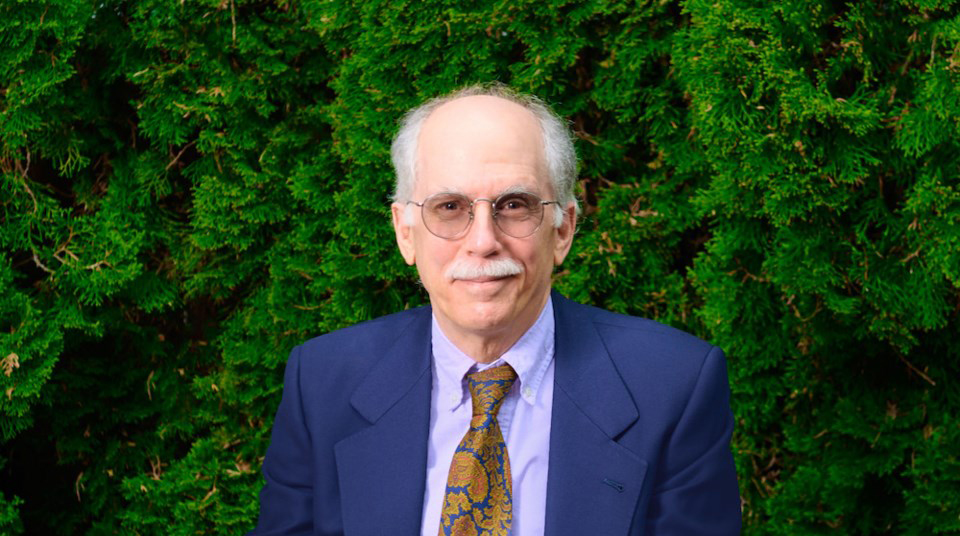 (John Roston ran for mayor in the 2022 civic election.)
In the last municipal election, I ran for mayor against incumbent Malcolm Brodie and Wei Ping Chen. Malcom and I are not running this time.
It is overwhelming to see seven declared candidates for mayor already.
Why are they running for mayor? Why not councillor? What do they know about being mayor?
Malcolm Brodie ran to win and did so with 66 per cent of the vote. Wei Ping Chen, who actually lived in Burnaby, ran mostly on better services for immigrants and received 5 per cent of the vote.
I received 27 per cent of the vote and ran as an alternative to Brodie’s policies and for the thrill of the chase.
With a popular mayor like Brodie, it is difficult to find someone plausible to run against him who doesn’t mind losing. Brodie and I had a couple of public debates about our policy differences. It was a battle of policy ideas not personalities.
I’ll be looking for policy differences among the current candidates for mayor. Difficult to find any so far.
They are mostly saying the same thing. Many of the things they speak passionately about solving – the drug problem, health care shortages, expensive public transportation – are not within the powers of the municipal government and they will have no ability to solve them if elected.
Voters are tired of candidates who in effect promise to wave a magic wand to solve problems and to add expensive new services, while reducing taxes, with money that will somehow fall from the sky.
My view is that there is no reason for the Richmond mayor and senior staff to be paid more than similar positions in other municipalities as they are now. For all their concern about municipal spending, none of the current mayoral candidates is pledging, as I did, to take a salary cut.
For example, one of my major differences with Brodie was his support for the continuing use of our scarce land to build thousands of strata condos which are mostly sold to investors and often sit empty.
This means the land cannot be used to relieve the critical shortage of purpose-built rental apartments for people who work in Richmond and those who were brought up here.
Ironically, the strata condo investors have since pulled out and approved projects have halted.
Although some of the mayoral candidates promise to provide more rental housing, they don’t say how they will do it.
How many of them know that the B.C. government gave Richmond the power to zone land for rental use only, but city council has refused to use that power except for land that already has rental housing on it? They have not done their homework.
Like the councillors, the mayor only has one vote which makes it difficult for the mayor to do what the candidates are promising to do.
Most of the candidates seem to have little knowledge of what the mayor does that is different from a councillor, except to make more speeches.
An important difference is that the mayor appoints the council committees that do much of the work of government. I argued that the mayor should rotate the membership of committees annually so that all the councillors have an equal opportunity to serve on the most powerful committees. That is not how it has been done.
The mayor also effectively controls the agenda for council meetings and has a lot of influence on how votes are taken. In these and other ways, the mayor has power.
Most of the mayoral candidates are not talking about how they will use the mayor’s power.
My point is that the mayor should resist the temptation to put a finger on the scale to exert undue influence and instead use the power of the position to ensure that councillors work collaboratively, disagree with one another respectfully and treat everyone coming before council equally.
I await candidates who will pledge to do that.
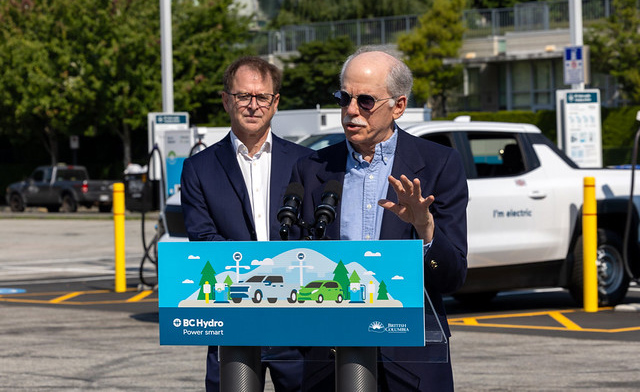 The press conference announced the expansion of the BC Hydro electric vehicle charging station network. Speakers included the Minister, Adrian Dix, and the president and CEO of BC Hydro, Charlotte Mitha.
BC Hydro will deploy 3,500 public charging ports by 2035, creating one of Canada's largest public charging networks. The expansion will more than triple the size of BC Hydro’s existing charging network and significantly increase charging capacity throughout the province.